
Can an ADU Be Attached to the House in Southwest Austin, or Does It Have to Be Detached?
Published November 16, 2026
If your Southwest Austin home is inside Austin city limits, your ADU can be attached to the house or detached. Austin's HOME rules allow up to three homes on lots zoned SF-1, SF-2 or SF-3, attached or detached, so ask City staff what your lot allows. Outside Austin city limits, ask the city or county that covers your address. For the whole project, you can plan around RenovatePros' published ADU estimates of about $100,000 to $400,000, by size and finish. That range is their own estimate, not a quote for your lot, with no split for attached or detached. The big difference is the shared wall: an attached ADU needs a fire-rated wall or floor between the homes.
What is an attached ADU?
An attached ADU is a complete small home that shares at least one wall, floor or ceiling with your main house. It has a place to sleep, a kitchen, a bathroom and its own way in. You might build one onto the side or back of your house, the same way a home addition is built. You could also build one over an attached garage, or close off part of your house and give it its own door. A detached ADU is a separate building on your lot, such as a backyard casita or guest house.
| Question | Attached ADU | Detached ADU |
|---|---|---|
| Where it sits | Built onto or inside your house | Its own building on your lot |
| Shares a wall, floor or ceiling with your house | Yes | No |
| Fire-rated wall or floor between the homes | Needed under the code's two-unit rule | Not part of that rule |
| Yard space it uses | Less, or none if built inside the house | More |
| Privacy between the homes | Less | More |
If you are thinking about turning your garage into the ADU, read whether a garage ADU or a new casita costs less in Oak Hill. For more on planning one, read ADU construction: what to know before you build.
Does Austin allow an attached ADU?
An attached ADU is allowed inside Austin city limits. The City's HOME rules allow up to three housing units on lots zoned SF-1, SF-2 or SF-3. The City's HOME page says those units can be attached or detached in any combination. The City has taken applications under those rules since February 5, 2024. Ask City staff what your lot allows before you choose a plan.
Before you lean on Austin's rules, check whether your Southwest Austin address is inside Austin city limits. If it is inside another city's limits, ask that city's building department, or the county if it is outside city limits. Then read your HOA rules and deed restrictions. Either one can block an ADU, even where the City allows it.
You may also hear about HOME Phase 2. HOME Phase 2 is a separate City of Austin rule that lets one home sit on a smaller lot. It is not an ADU rule. The City's rules for your lot set how big and how tall your ADU can be, so ask for those limits before you draw plans.
What does an attached ADU need to meet code?
An attached ADU needs a fire-rated wall or floor between it and your house, because the two homes share one building. Section R302.3 of the 2021 International Residential Code sets the base rule. Two homes in one building must be split by walls and floors rated for at least 1 hour of fire. The rating can drop to 1/2 hour when the whole building has a qualifying sprinkler system.
Local rules can change that base rule. The City of Austin's Residential Plan Review page says the City reviews homes under the 2024 International Residential Code, with its own local changes. A detached ADU is a separate building, so the two-unit wall rule does not apply to it. A detached unit still has code checks of its own.
Inside Austin city limits, a new dwelling unit, such as an ADU, goes through the City's New Construction or Addition application. The same City page says a new dwelling unit with living space on the first floor must also meet Austin's Visitability Ordinance.
When you talk to your city, or the county if you are outside city limits, ask:
- Which code edition and local changes apply to your address?
- What fire rating do the shared wall and floor need, with and without sprinklers?
- Which permit application does an attached ADU take?
- What does your lot allow for size, height and placement?
Which costs less, attached or detached?
An attached ADU tends to cost less to build than a detached one. An attached unit shares at least one wall with your house and sits closer to its water, sewer and power lines. You will see the same view in the FAQ on RenovatePros' ADU page: "attached units are typically more cost-effective and easier to access from the main home." The same answer says detached units "offer more privacy and independence but require additional space and permits." The published ADU construction price tiers list no separate attached or detached prices, so you see the real gap only when both plans are priced on your lot.
The cost gap between an attached and a detached ADU comes from what each one has to build. A detached ADU needs its own foundation, four outside walls, a roof and utility lines run across your yard. An attached ADU adds the fire-rated wall or floor, plus work on the house you live in.
| Cost line | Attached ADU | Detached ADU |
|---|---|---|
| New foundation | Only under the new part, or none inside the house | A full new foundation |
| Outside walls and roof | At least one wall shared with your house | All its own |
| Utility lines | Shorter runs from your house | Longer runs across your yard |
| Fire-rated separation | A rated wall or floor between the homes | Not part of the two-unit rule |
| Work on your house | Opening up and tying into your house | Little or none |
Your lot decides which of those lines costs more. A steep yard or a long run to the utility lines can push a detached unit up. An older house that needs work where the new unit joins it can push an attached unit up. Ask for both plans with the same list of rooms, and ask for the fire-rated wall, any sprinklers and the separate entrance as their own lines.
What if the house is outside Austin city limits?
If your house is outside Austin city limits, Austin's HOME rules do not apply to it. Bee Cave, Lakeway, West Lake Hills, Rollingwood and Dripping Springs each have their own rules. If your address is inside one of those cities, ask that city whether your lot allows an attached or a detached ADU. If your address is outside any city's limits, ask the county.
To find out whose rules cover your house:
- Check whether your address is inside a city's limits.
- If it is, ask that city's building department about attached and detached ADUs.
- If your address is outside city limits, ask the county what it requires for a second home on your lot.
- Read your HOA rules and deed restrictions either way.
Which one works better for a parent or a renter?
An attached ADU usually suits a parent who may need help close by. A detached ADU usually suits a renter who wants privacy. The right choice for your lot depends on who will live there and what they need each day.
| Who will live there | What they need | Option that usually fits |
|---|---|---|
| An aging parent | Help close by, few steps, a bathroom that is easy to use | Attached ADU |
| A renter | Privacy, a full kitchen, a bathroom and a separate entrance | Detached ADU |
| Guests or a grown child | Their own bath and a way to come and go | Either; detached gives more privacy |
If you plan to rent the ADU, ask your city or the county about rental rules for your address before you build.
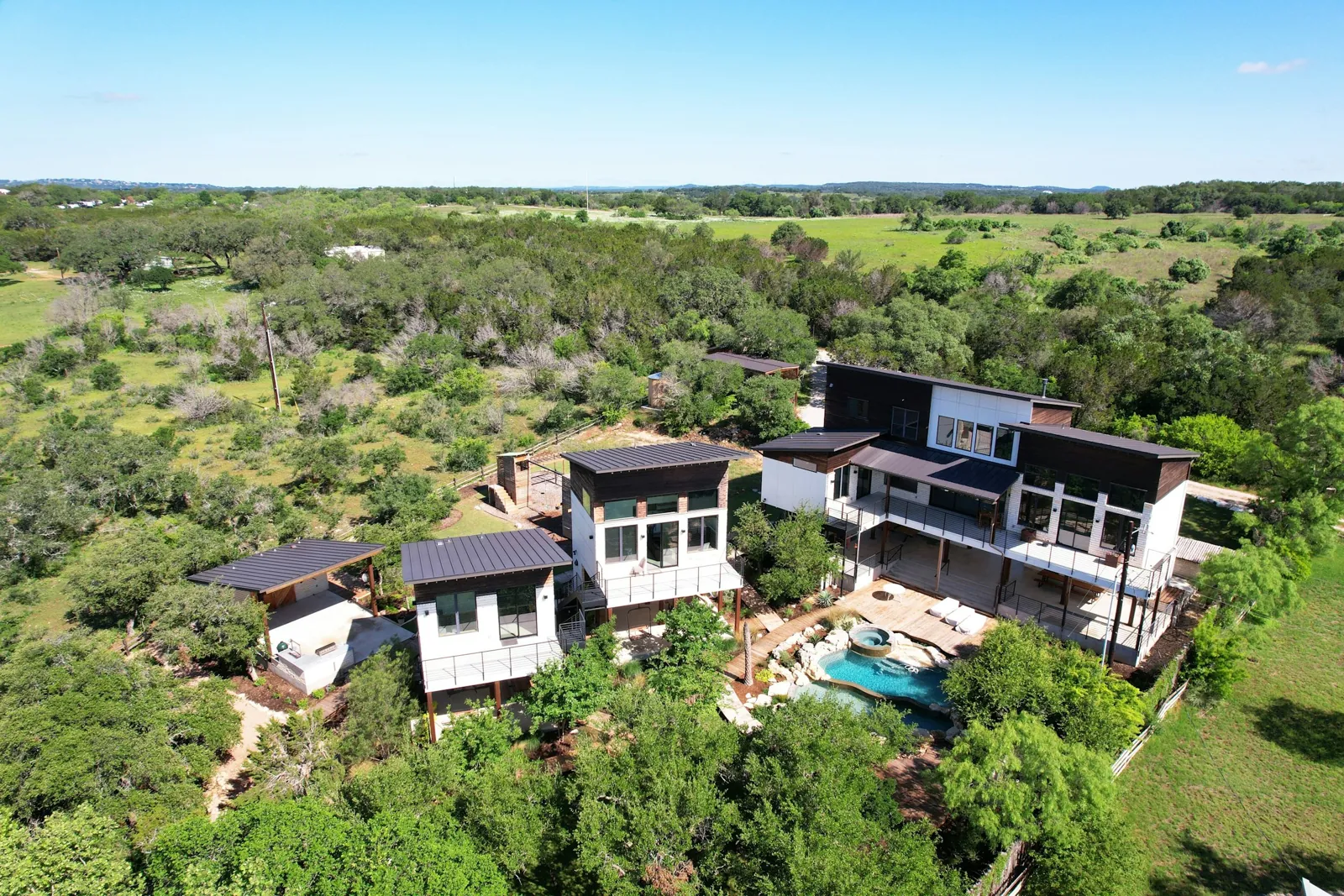
For a detached example, see the Spicewood Lake Retreat, a RenovatePros build in Spicewood. The lot has two detached guest houses: a 631-square-foot loft guest house and a 320-square-foot casita. The loft guest house has a full bath and a built-in kitchenette. The casita has its own bath and kitchenette. Both guest houses have their own heating and cooling, so guests can come and go on their own.
How do we choose between attached and detached for our lot?
Choose between an attached and a detached ADU by pricing both on your own lot, once your city or the county tells you what the lot allows. Bring your survey, your HOA rules and a list of who will live in the ADU. You can schedule a free, no-obligation consultation to talk through both plans, and a virtual one is offered if that is easier. If your home is in Dripping Springs, Bee Cave, Lakeway, West Lake Hills, Rollingwood, Sunset Valley, Oak Hill, Circle C Ranch, Belterra, Driftwood, The Hills, Spicewood or Wimberley, you are in RenovatePros' service area.
Frequently asked questions
What is the difference between an attached ADU and a detached ADU?
An attached ADU shares at least one wall, floor or ceiling with your house, while a detached ADU is its own building on your lot. Both are complete small homes with a place to sleep, a kitchen, a bathroom and their own way in. An attached ADU needs a fire-rated wall or floor between the two homes under the residential code's two-unit rule.
What is an attached ADU?
An attached ADU is a complete small home built onto or inside your house, with its own place to sleep, kitchen, bathroom and entrance. It shares at least one wall, floor or ceiling with the main house. You might build one as an addition, over an attached garage or by closing off part of the house.
What are the requirements for an attached ADU?
An attached ADU has to be allowed on your lot and has to meet the building code for two homes in one building. Section R302.3 of the 2021 International Residential Code calls for walls and floors rated for at least 1 hour of fire between the homes, or 1/2 hour with a qualifying sprinkler system. Inside Austin city limits, HOME rules allow attached or detached units on lots zoned SF-1, SF-2 or SF-3; ask City staff what your lot allows and ask the City which code edition and local changes apply to your plans.
Is an attached ADU cheaper than a detached ADU?
An attached ADU tends to cost less than a detached one, because a detached unit needs its own foundation, roof and longer utility lines. RenovatePros' ADU page says "attached units are typically more cost-effective and easier to access from the main home." Price both plans on your own lot, since the fire-rated wall and work on your house add cost to an attached unit.
Can I build an attached ADU in Bee Cave, Lakeway or Dripping Springs?
Bee Cave, Lakeway, West Lake Hills, Rollingwood and Dripping Springs each have their own rules, so ask that city whether your lot allows an attached or a detached ADU. First check whether your address is inside that city's limits, and ask the county if it is outside city limits. Austin's HOME rules apply only to addresses inside Austin city limits.
Is an attached or detached ADU better for an aging parent?
An attached ADU keeps a parent close by for help and, in RenovatePros' published view, is easier to reach from the main home. A detached ADU gives both homes more privacy and quiet. Choose by how much day-to-day help your parent needs, and plan few steps and an easy-to-use bathroom either way.